Decrypting Middle Age European Myths
· 6 min read
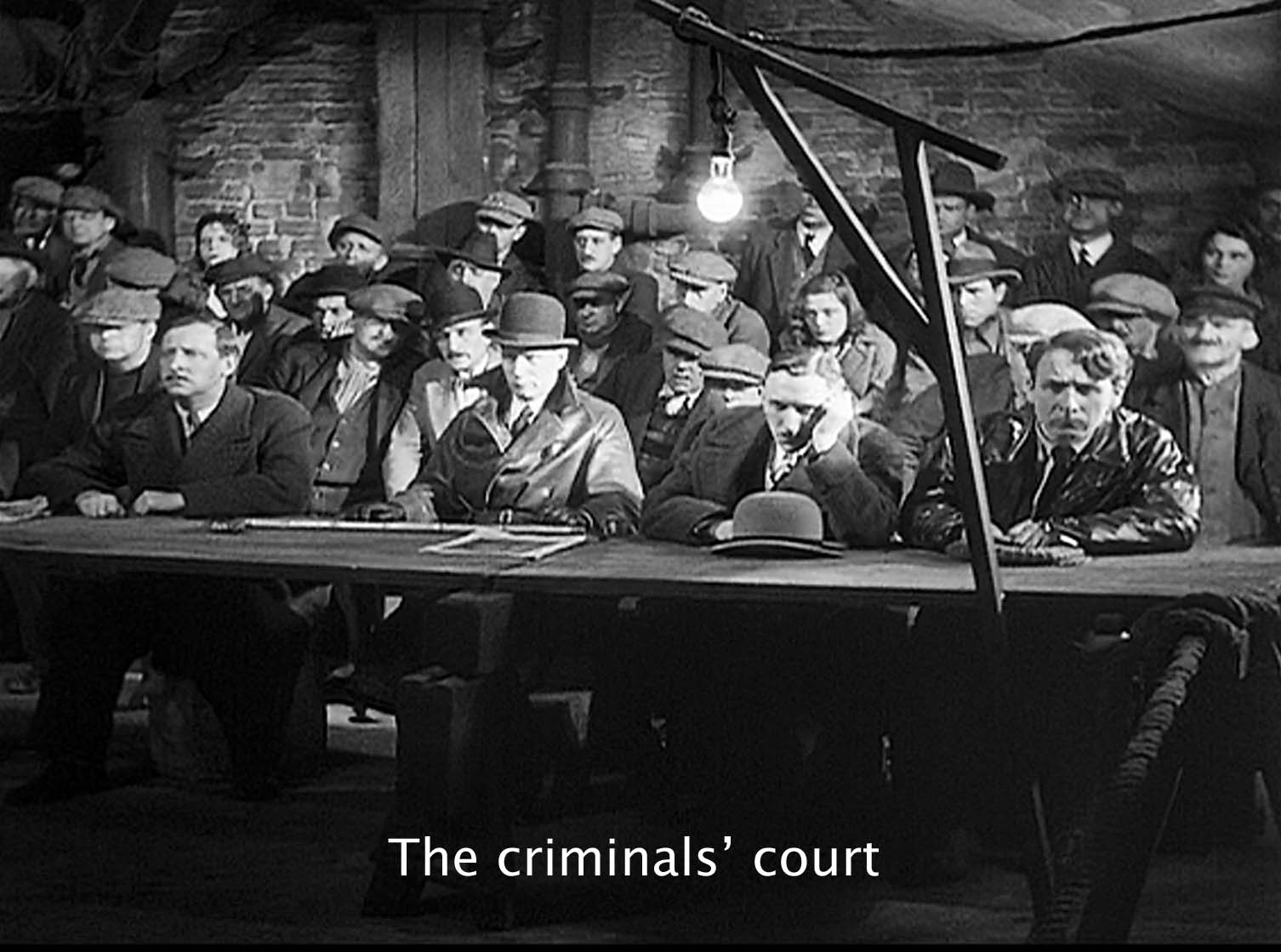
Vehmic courts
I recently stumbled across the Vehmic courts on Wikipedia. The courts were an informal social group that spanned centuries in what was historically called Westphalia. The historical causes are fuzzy; there are no concrete academic works on them that I can find. More about those causes can be read here, which I will not repeat. Rather, they persist more like myths and oral folktales.
What is certain is that they existed to some degree. There are various documents and pieces of evidence pertaining to these courts. They were written about as early as the 1820s by Sir Walter Scott, most likely influenced the criminals' court in Fritz Lang's M, and even appeared in the TV show The Blacklist.
Like any myth, there are ambivalent readings of what they did. Some of the readings are romantic: the courts were community-run vigilantes, held together by a code of honor, that rendered justice swiftly to those who committed crimes such as rape and theft. Actually, most of what I have read is just this, but vigilante groups taking it upon themselves to rule in semi-secrecy have a pretty dark history around the world, and it would be surprising if the favorable story, the one written by the victors, were the most accurate one.
What is most interesting is that they seemed to be a broadly Christian-influenced organization. The crimes depicted were not based on legal codes, but instead on the Bible. The crimes were broadly construed: not just breaking the Ten Commandments, but also any sort of heathen or sacrilegious activity could be punishable. The punishment was almost always death. There were lesser punishments, it seems, for older boys and minor offenses, but enough minor offenses resulted in death.
The myth contradicts itself over the years. For example, there are reports that the accuser needed seven witnesses to make an accusation. At times, it seems that this was enough; at other times, there was an actual court where the accused, if he could bring 30 witnesses on his side, could be acquitted.
Most of the murders seemed to be lynchings, but there is a vivid story about kissing the statue of the Virgin Mary, which then opens up to be a spiked torture device that encloses the victim. The victim then falls to their death, though not before experiencing other torture devices on the way down.
The criminal court is more paradoxical in the fact that any good reading of the Bible, particularly the New Testament, would find it sacrilegious for humans to dole out the punishments themselves. It was a step in the right direction that they required seven witnesses, just as it was a step in the right direction that God made it such that anyone who slew Cain would be subjected to sevenfold vengeance. One accuser needs seven witnesses to back up their claim. But a murderous secret court of Christians is just as contradictory as Jesus telling Peter to kill the Romans or Judas. 11. Then said Jesus unto him, Put up again thy sword into his place: for all they that take the sword shall perish by the sword. -- Matthew 26:52
The hermeneutic difficulties surrounding this story come from the fact that, most of the time, we are missing any sort of key to reading it. Following Girard, the probable facts and logic are there if we know how to read it. Girard analyzed many myths through his threefold interpretive background: the Bible, modern literature, and comparative religion.

Another Girardian exegesis
For Girard, imitation is like the plague: it is subconscious, informal, and the engine of our social logic. Contemporary movies and TV, modern literature, and archaic myths all show these same points. Girard also uses the Bible, particularly the exposing of the logic of the scapegoat in the New Testament, "for they do not know what they do," and stories like Joseph to show that simple accusations, jealousy, and rivalry can escalate social tensions, which are then resolved by a scapegoat-influenced solution.
The ones who wrote the myths are those who did the murder. Someone or Some group must have killed the original gods and deities, the Wild Hunt, the dogs of war or hell hounds, etc. The problem is that these murderous mobs usually lurk hidden in the background or outside the text completely, making Girard's claims lack any sort of positivist criterion of truth.
But with something like the Vehmic courts, it is easier to see how this played out in reality. We have seen countless examples of mob justice and mob rule through more modern history. The Sopranos showed this, especially when Tony went to Italy and saw how cruel and mean the real Italian Mafia was. Actually, the gradual weakening of the mob over the years and across continents depicts the logic of many myths and folktales.
For Girard, myths get weaker over time; they lead to a sort of self-censorship. In the beginning, the sacred origin of the founding murder held more power and more ambivalence. A classic example is myths about gods such as Zeus or Apollo: the former would rape women, the latter bring plagues. They were to be feared and loved at the same time. This was because the founding murder and the engendering of the sacred brought about the end of whatever mimetic social crisis (see plague) was afflicting a people. This end was cathartic. It also brought about the god, who at first was not only a demon powerful enough to disrupt an entire social group, but powerful enough to lift the mimetic plague as well.
This founding murder was ritualized unconsciously in many ways throughout time and place, leading to diversity but also unity in myths. The Bible shows this gradual learning process, particularly in one of the oldest stories, Job. Job is a victim of the process of idolization, one who was once a respected leader but is now being told by his "friends" that he is evil and that God is punishing him. Job's story is quite biblical in that it resists this mob logic. Those who appear as friends are really more akin to the accuser, Satan, and Job gives an early theological response that he is no more evil than anyone else.
If we take this rough Girardian key to unlock the Vehmic courts, the story would go something like this: the Vehmic courts were a form of informal social control that became more and more formal as the formal control of the state disappeared. Initially, they were more "pure," but also more ambivalent. They took on protective duties, as yakuza or mafia groups might in their own communities. But the ambivalence eats away over time, and people generally soften in favor of moral consistency, with schisms occurring. The courts probably added more legitimacy by necessitating seven witnesses and allowing the accused to show up in court. At the same time, they were probably used for extrajudicial killings and power grabs under the guise of divine authority. As they became more like real courts, and as the power of the state became more legitimate and widespread, the courts weakened. However, the extreme elements of vigilantism, extrajudicial murders of the out-group, and "scapegoats" crystallized in a more consistently "evil" or negative side of the legacy. 22. the Feme murders show just this, where some Germans took it upon themselves to kill their enemies.
Gilles de Rais
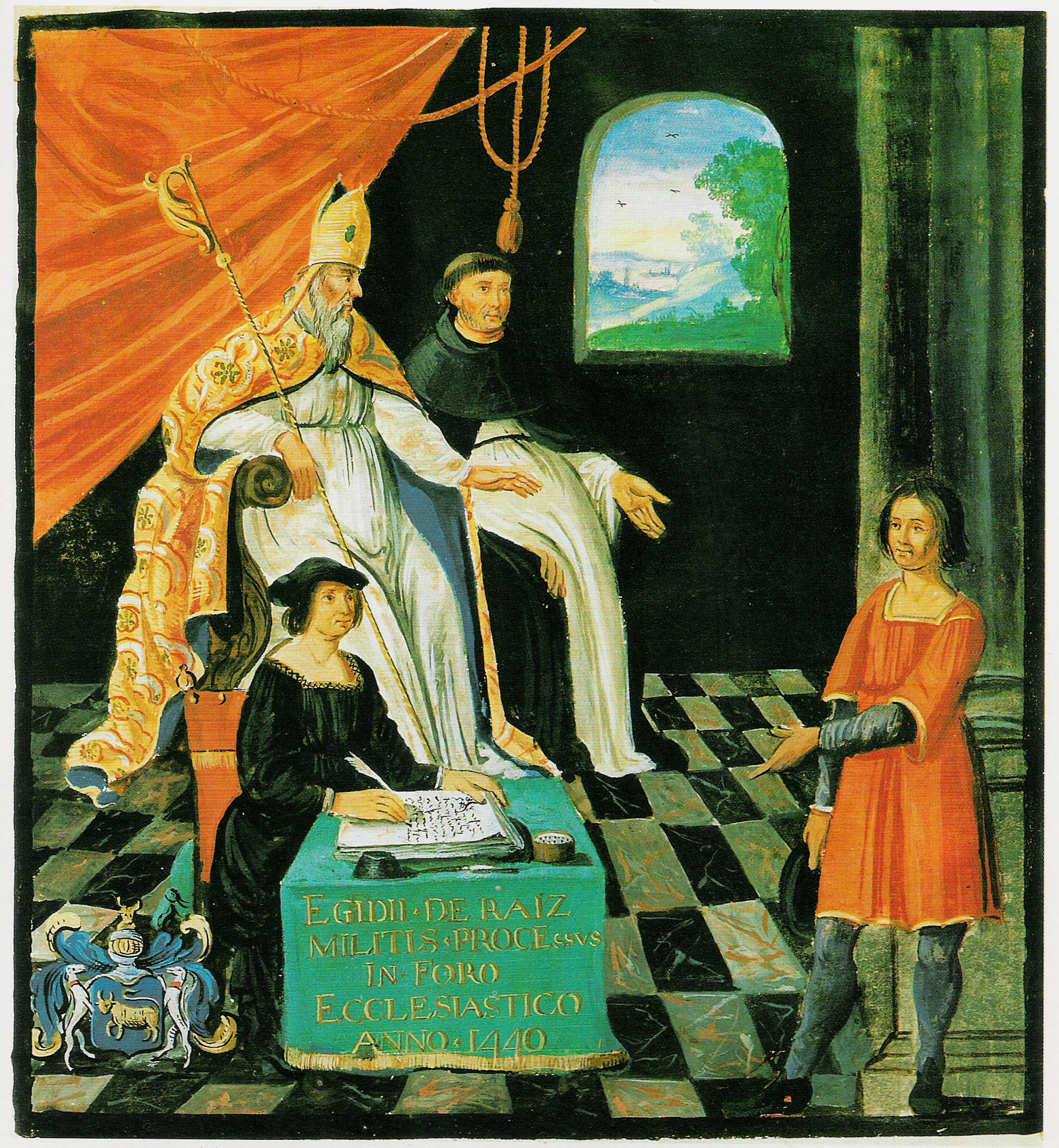
This mythological process is similar to what, I suspect, happened to the famous Gilles de Rais. Like any idol, he had his rise and fall. During the war he was a comrade of Joan of Arc, and then afterward went into decline, most likely due to political envy. The accusations against him are so grand that he might be the most evil human in history, but it is just too far-fetched. Every taboo in the moral order of the era was there: "magic, heresy, sodomy, murder of children, and lèse majesté." 33. from Jacques Chiffoleau's Rumours from Nantes. The Unending Story of the Crimes of Gilles de Rais Gilles de Rais was accused of killing 140 or more women.
Jacques Chiffoleau might be one of the few who have written about this question of guilt in depth and from a viewpoint similar to Girard's. The accusations are a giveaway for Chiffoleau. It would be similar to someone being accused of devil worship, being a communist, being an illegal immigrant, and being a pedophile in the United States today. For de Rais, it was:
1 rebellion, that is to say the internalized refusal of the legitimate order; 2 the pact with the devil, which gives magical powers; 3 unnatural acts, sodomy or incest.
These just so happened to be the major taboos of the day. Many people were accused of them over and over in this era. In another sense, the accusations were overdetermined; the story is too good, too grand to be true. What is more likely is that it was a glorified lynching. The most obvious tell is that Gilles de Rais became a mythical figure: Bluebeard, the ogre, a boogeyman.
Notes
- Then said Jesus unto him, Put up again thy sword into his place: for all they that take the sword shall perish by the sword. -- Matthew 26:52
- the Feme murders show just this, where some Germans took it upon themselves to kill their enemies.
- from Jacques Chiffoleau's Rumours from Nantes. The Unending Story of the Crimes of Gilles de Rais